October in Fort Wayne: normal high 64°F, low 43°F
A furnace check before the first frost
Do a furnace check before first frost, which NOAA's normals put around October 21 in Fort Wayne: check the filter, test the CO alarms, try the thermostat and book a tune-up.
A photo essay from the people at Warm in January, Cool in July. Updated .
When does the first frost reach Fort Wayne?
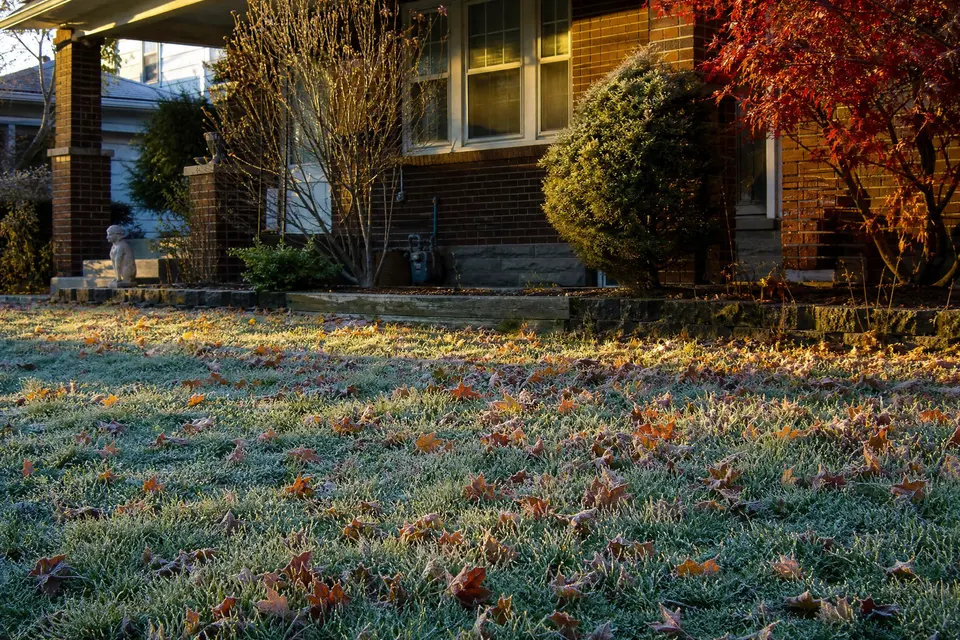
Plan on mid-to-late October. NOAA's 1991-2020 normals for Fort Wayne International put the 50% date for a first 32°F night at October 21. There's a 10% chance of one by October 8 and a 90% chance by November 1. The first 28°F night has a median date of November 1. A normal October still reaches 63.7°F by day and 42.8°F at night, so the heat may not run much before then. That makes early October a good time to find out whether yours works.
What should you do with the filter?
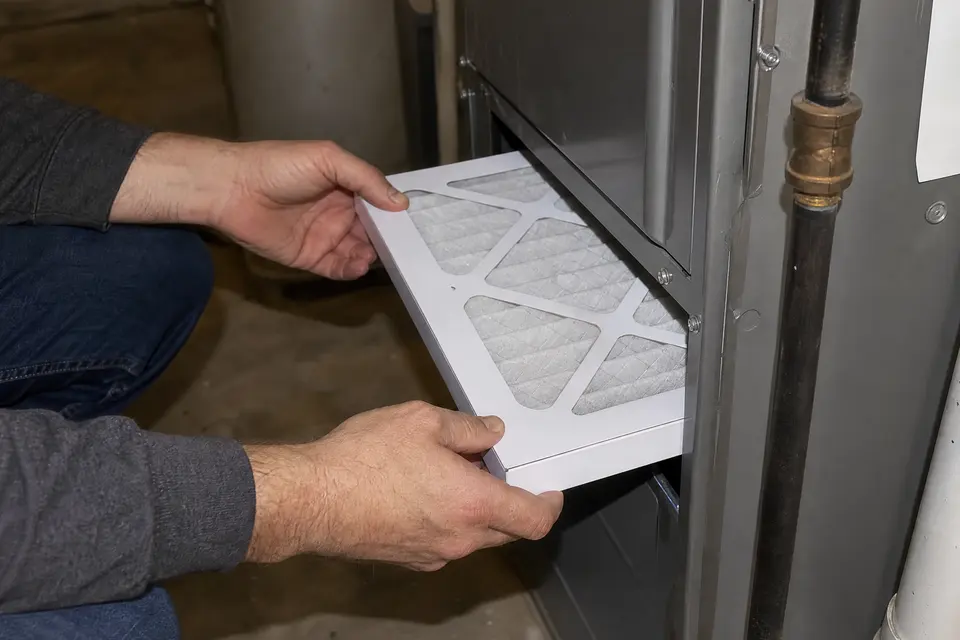
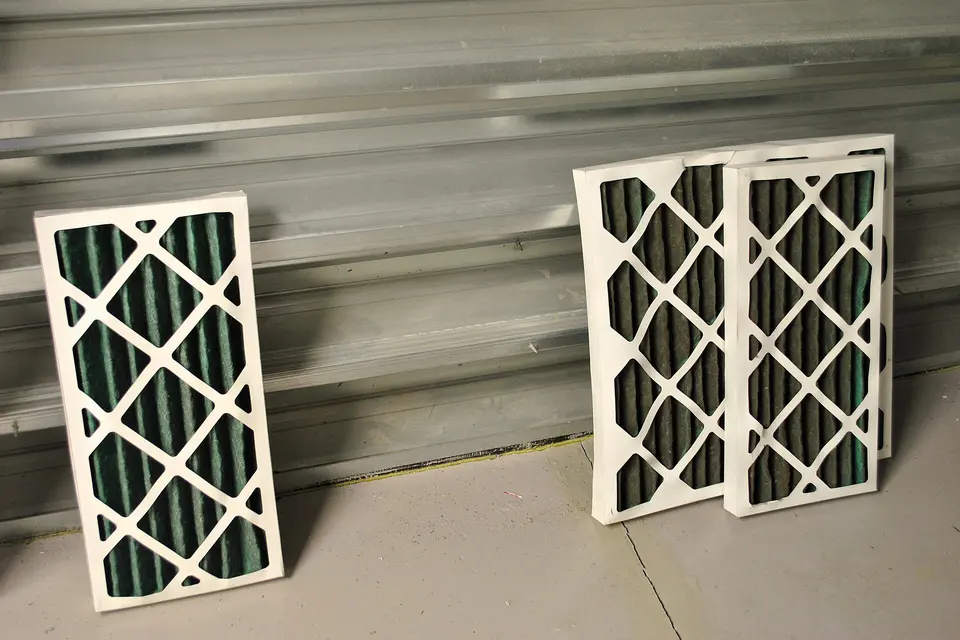
Turn the furnace switch off first, then pull the filter out and look at it. ENERGY STAR's maintenance checklist says to inspect, clean or change air filters once a month, and warns that a dirty filter raises costs and can cause early failure. Its older guide says to change a dirty filter, or at least every three months. Filter types differ, so follow the filter's package. Read the size on the frame, slide the new filter in with its airflow arrow pointing the way the old one pointed, and only then switch the furnace back on.
Where do CO alarms go?
Put one on every level with living or sleeping space, and outside sleeping areas, and follow the alarm's instructions. Sources differ on basements. CPSC says not in basements unless they include a sleeping area, and NFPA says every level including the basement. CPSC's guide says to avoid spots near heating vents or where furniture or drapes can cover the alarm, and that an alarm must meet UL 2034. CDC says to replace them per the maker's instructions or every 5 years.
What if a CO alarm sounds?
Everyone gets out first. Then call 911 from outside. Don't look for the source, and don't go back in until responders say so. CPSC's wording also tells you to do a head count. CDC lists symptoms as "headache, dizziness, weakness, upset stomach, vomiting, chest pain, and confusion," and says sleeping people can die before they feel them. For a gas smell, leave first, with no switches, phones or flames inside. NIPSCO's December 2025 safety release says to call 911 and its emergency line, 1-800-634-3524, once you're out.
| What | The figure | Where it comes from |
|---|---|---|
| First 32°F night, 50% date | October 21 | NOAA NCEI normals |
| First 32°F night, 10% chance by | October 8 | NOAA NCEI normals |
| First 32°F night, 90% chance by | November 1 | NOAA NCEI normals |
| First 28°F night, median | November 1 | NOAA NCEI normals |
| October normal high and low | 63.7°F and 42.8°F | NOAA NCEI normals |
| Filter inspection | once a month | ENERGY STAR |
| Americans who die each year from non-fire CO | more than 400 | CDC |
Is a tune-up worth booking?
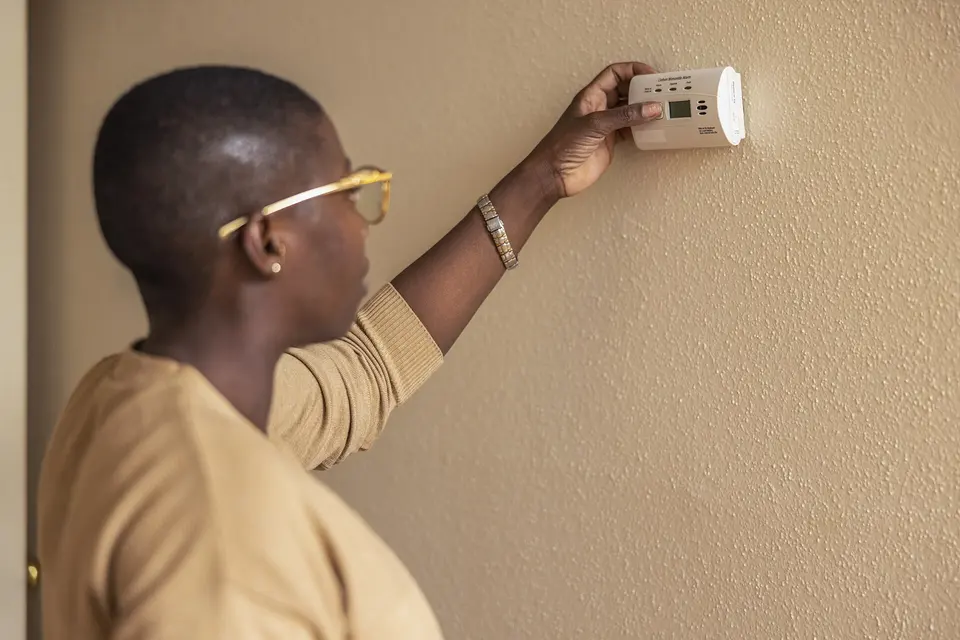
Yes. CPSC says to have the heating system professionally inspected and serviced annually, and that the inspector checks chimneys and flues for blockages, corrosion and disconnections. ENERGY STAR's pre-season list covers the thermostat, electrical connections, the condensate drain and controls, plus gas connections, gas pressure, burner combustion and the heat exchanger. Those are all a pro's jobs. Your part is the easy end of it: set the thermostat to heat a few degrees above the room and see that warm air comes out. Then keep registers clear of furniture, and glance at any plastic vent pipes outside for leaves or anything else blocking them.
What to do
Right now
- Check the filter. Change it if it's dirty.
- Test each CO alarm and check its date.
- Set the thermostat to heat and confirm warm air at the registers.
Before next winter
- Book the annual inspection before the October 21 date, if you can.
- Add a CO alarm wherever a level or sleeping area lacks one.
- Keep a few spare filters of the right size.
Call a pro when
- No heat comes on after you've checked the thermostat, furnace switch, breaker and filter.
- A CO alarm has sounded. Everyone out first, 911 from outside, no going back until responders say so, then have the system inspected.
- You smell gas. Leave first, then call 911 and NIPSCO from outside.
What neighbors ask
How often should I test a CO alarm in Fort Wayne?
CPSC says to test monthly and replace batteries annually. CDC says to replace the alarm per the maker's instructions or every 5 years. Check your own alarm's manual, since the life of an alarm varies.
Can I do the whole furnace check myself?
You can handle the filter, the thermostat test, the alarms and clear registers. A pro handles gas connections, burners, the heat exchanger, flues and wiring.
Should a CO alarm go right beside the furnace?
CPSC does not recommend installing them above fuel-burning appliances or in kitchens, and says to avoid spots near heating vents. Follow your alarm's instructions.
Is October too early to schedule a tune-up?
No. ENERGY STAR calls these pre-season check-ups, and October's normal low is still 42.8°F. A 10% chance of a first 32°F night by October 8 argues for booking sooner.
Where this came from
This essay rests on NOAA normals, CPSC, CDC, NFPA, ENERGY STAR and a chamber of commerce repost of NIPSCO's December 2025 release, checked November 3, 2026. NIPSCO's own site could not be opened when this was checked, so compare its wording there.