June in Fort Wayne: normal high 81°F, low 60°F
Damp basements and sticky rooms in June
For a damp basement, humidity should stay below 60 percent, ideally 30 to 50, per EPA. A $10 to $50 meter tells you where you stand.
A photo essay from the people at Warm in January, Cool in July. Updated .
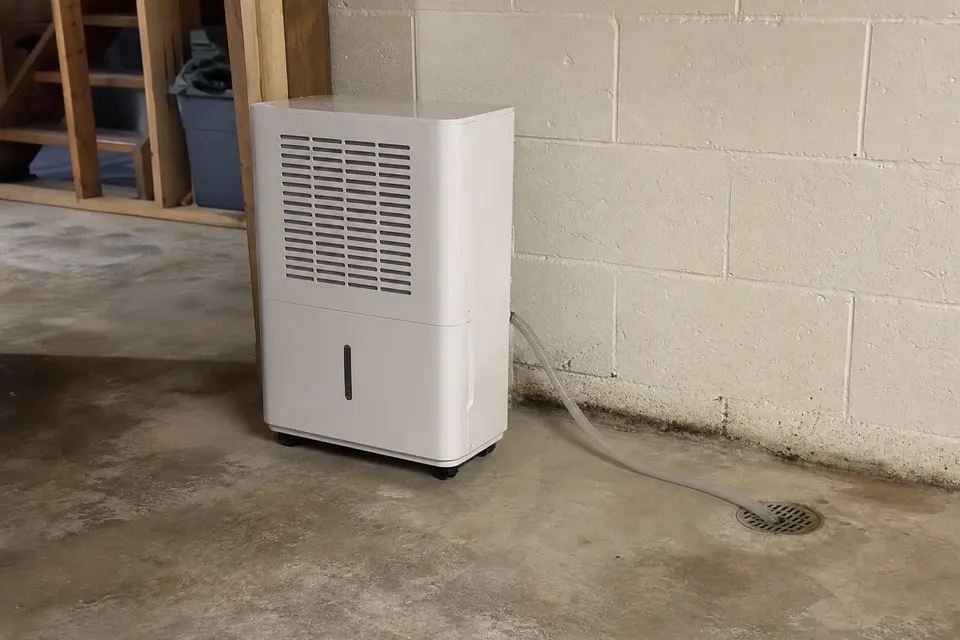
How humid is too humid for a basement?
Above 60 percent is too humid, by EPA's line: "keep indoor humidity below 60 percent (ideally between 30 and 50 percent) relative humidity." EPA says a meter costs about $10 to $50. Buy one and read it in the basement and upstairs on a muggy day, since a feeling is hard to act on. Fort Wayne's summer air brings the moisture in. This site's average of NOAA's hourly normals puts the July dew point at 63.4°F across all hours, with the 90th percentile peaking at 73.9°F.
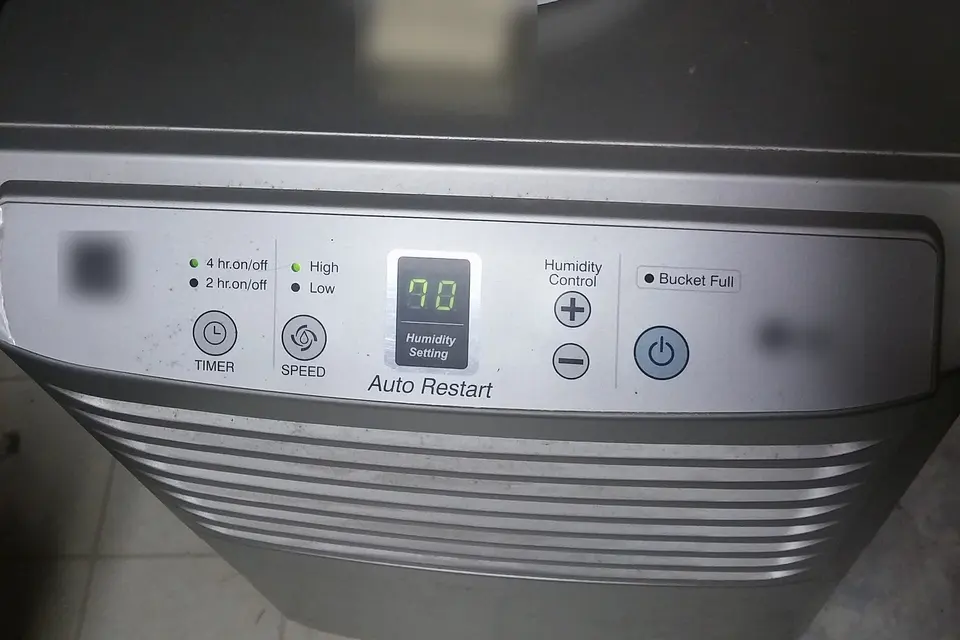
What size dehumidifier does a basement need?
That depends on how damp the space is and how big it is. ENERGY STAR's chart goes by the humidity you measure, which is one more reason to own a meter. It also says certified units are 20% more efficient. Empty the bucket or run a hose to a floor drain, as in the lead picture. Set the control and check the room a day later with your own meter, since the two can disagree.
| What | The figure | Where it comes from |
|---|---|---|
| EPA indoor humidity target | 30 to 50 percent, below 60 percent | EPA |
| July dew point, all hours, this site's average | 63.4°F | NOAA NCEI hourly normals |
| Dehumidifier at 50-75% humidity, under / over 2,000 sq ft | 20-30 / 30+ pints a day | ENERGY STAR |
| Dehumidifier at 75-90% humidity, under / over 2,000 sq ft | 25-40 / 40+ pints a day | ENERGY STAR |
| Dehumidifier at 90-100% humidity, under / over 2,000 sq ft | 30-50 / 50+ pints a day | ENERGY STAR |
| Time to dry water-damaged areas | 24 to 48 hours | EPA |
| Mold you can usually clean yourself | Under about 10 square feet | EPA |
Why does a room feel sticky with the AC running?
A sticky room can point to humidity, airflow or a system of the wrong size. Start with your meter. Then ask about size: DOE warns that oversized cooling systems "can cost too much, provide inadequate comfort, and lead to mold and poor indoor air quality," and it recommends ACCA Manual J. ENERGY STAR also tells contractors to inspect ducts and measure airflow. A contractor can tell you which of these fits your house. No source this site read ties a dehumidifier's size to an oversized AC, so it won't guess at one.
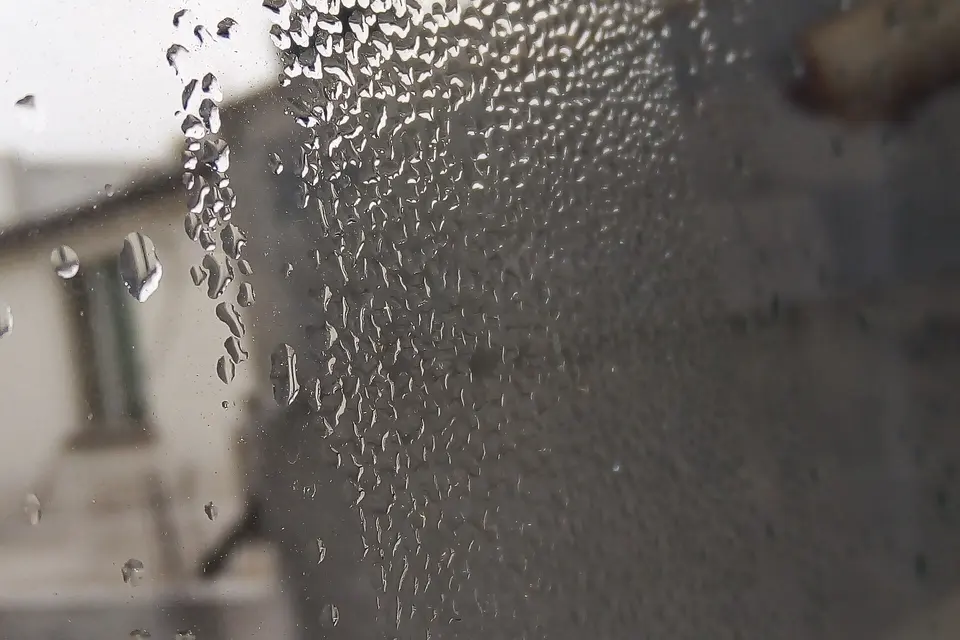
What about water, mold and condensation?
Dry first and act quickly. EPA says to dry water-damaged areas and items within 24 to 48 hours. To prevent condensation, it says reduce humidity, increase ventilation or air movement, insulate cold surfaces, or raise the air temperature. Mold under about 10 square feet is usually a do-it-yourself cleanup. Past that, consult EPA's guide. Do not run the HVAC system if you suspect it's contaminated with mold, and call a pro to look at it.
What to do
Right now
- Buy a humidity meter and read it in the basement and upstairs.
- Set the dehumidifier so the meter stays below 60 percent.
- Dry any wet spot within 24 to 48 hours.
Before next summer
- Match your dehumidifier to ENERGY STAR's chart.
- Ask for Manual J if your central air is due for replacing.
- Look along the base of the walls for staining.
Call a pro when
- Mold covers more than about 10 square feet, or you suspect it's in the HVAC.
- Rooms stay sticky with humidity under control and the system running.
What neighbors ask
What humidity should a Fort Wayne basement be in summer?
EPA says below 60 percent, ideally between 30 and 50 percent. A meter will tell you, and the setting on the machine may not match it.
Is 70 on my dehumidifier too high?
If that number is its humidity setting, it's above EPA's 60 percent line. Lower it and check against a separate meter over a day or two.
Can I run the dehumidifier to a floor drain?
Many have a hose fitting for that, as in the picture. Check your model's manual, and check that the drain is one that carries water away.
Is an oversized air conditioner really a problem?
DOE says oversized cooling systems can cost too much, provide inadequate comfort, and lead to mold and poor indoor air quality. It says rules of thumb per square foot don't account for climate or how efficient the house is.
Should I worry about window condensation in summer?
EPA treats condensation as a possible sign of high humidity. Dry it quickly, then read your meter to see what's behind it.
Where this came from
This essay rests on EPA, ENERGY STAR, DOE and NOAA's hourly normals, checked November 3, 2026. The dew point figures are this site's averages of NOAA's hourly data, and you should check your own dehumidifier's manual for its drain and settings.