January in Fort Wayne: normal high 33°F, low 18°F
Snow on the furnace vents
Snow on furnace vents can block a high-efficiency furnace's intake or exhaust pipe. Clear them by hand after each heavy snow. NIPSCO says clear vents help you avoid carbon monoxide buildup.
A photo essay from the people at Warm in January, Cool in July. Updated .
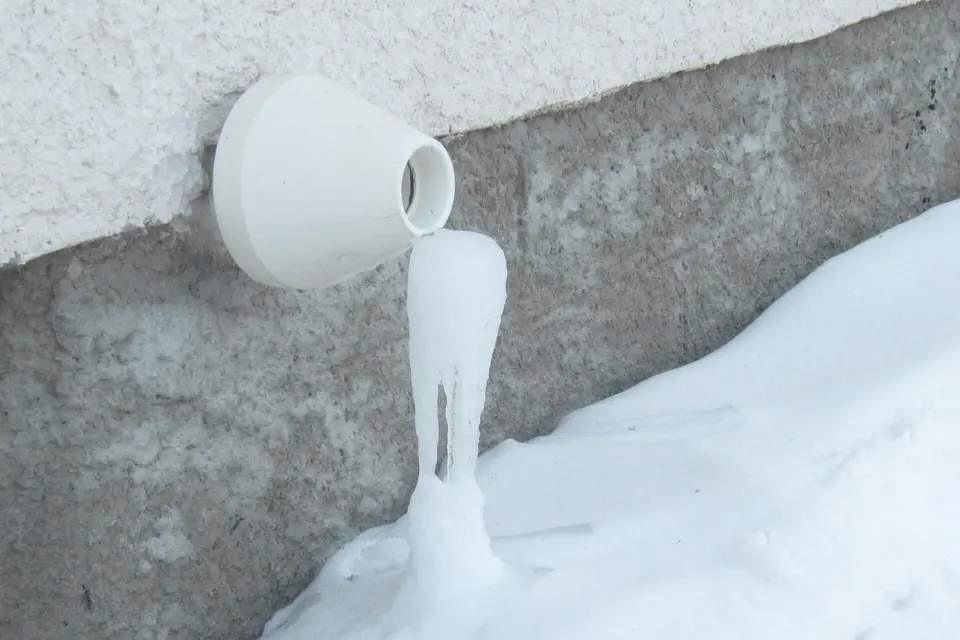
Why does snow on the vents matter?
Blocked vents can lead to carbon monoxide buildup. NIPSCO's December 2025 winter safety release says: "Keeping these vents clear can help you avoid carbon monoxide buildup and operational issues with your appliances." The National Weather Service also tells gas furnace owners to check for a snowdrift as soon as it is safe to go out. About 71% of occupied Fort Wayne homes heat with utility gas, census figures show, so find out how yours vents before the first storm.
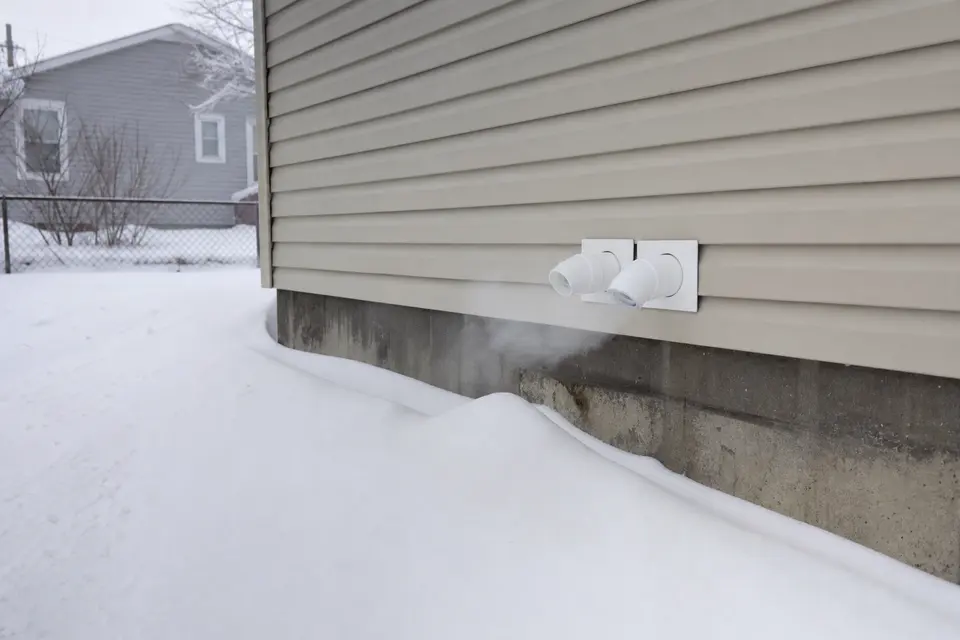
How do you find your furnace vents?
Start at the furnace and follow the pipes. A condensing furnace usually has two white plastic pipes rising from its top: one brings in combustion air and the other carries exhaust out. Then go outside and find where they leave the house. Some exit low on a side wall, right where drifts form. Some go through the roof, and the Weather Service says of roof vents, "you may need to turn off the upstairs unit until the snow melts off your roof." If you see no plastic pipes, ask at the next yearly service how your furnace vents.
How do you clear them safely?
Use your hands, gently, and wear gloves. Lift snow away from both pipes and from the ground in front of them. Keep shovels and snowblowers well away, and put nothing inside a pipe. If a pipe looks cracked, loose or iced up inside, leave it and call a heating contractor. Check the gas meter on the same trip. NIPSCO asks you to keep it clear and visible, and says "don't use a shovel or hammer to hit the equipment to break up snow or ice buildup." Don't pile shoveled snow against that wall.
What if a CO alarm sounds or someone feels ill?
Leave first. The vents can wait. Get everyone out, then call 911 from outside. CPSC says not to look for the source and not to go back in until responders give permission. CDC lists headache, dizziness, weakness, upset stomach, vomiting, chest pain and confusion, and warns that sleeping people can die before they have symptoms. If you smell gas, also leave first. Use no switches, phones or flames inside, then call 911 and NIPSCO from outside. NIPSCO's December 2025 safety release gives its emergency line as 1-800-634-3524.
When should you go out and look?
Go after any heavy snow, after a windy day even with no new snow, and before you leave home for a few days. A furnace manual this site saw only in a search result says the same: check the vent system after heavy snow, ice or frozen fog. Read your own manual for its wording. Some makers give a clearance above the snow line, but this site could not confirm a figure that fits every furnace, so it prints none.
| What | The figure | Where it comes from |
|---|---|---|
| Normal January snowfall, Fort Wayne | 10.8 inches | NOAA normals, 1991-2020 |
| Normal snowfall in a year | 33.6 inches | NOAA annual normals |
| Normal January low | 18.4°F | NOAA normals, 1991-2020 |
| Fort Wayne homes heated with utility gas | 71.0% | ACS 2020-2024 via Census Reporter |
| Americans who die each year from non-fire CO | more than 400 | CDC |
What to do
Right now
- Find where your furnace pipes leave the house
- After a storm, clear them gently by hand
- Keep the gas meter clear and visible
- If a CO alarm sounds, get out first and call 911 from outside
Before next winter
- Put CO alarms on every level with living or sleeping space and outside sleeping areas, following the alarm's instructions (CPSC and NFPA differ on basements)
- Decide where shoveled snow goes, away from that wall
- Read your furnace manual's section on vents
Call a pro when
- A vent pipe is cracked, loose or iced up inside
- The heat does not come back after the pipes are clear
- Vents keep icing up storm after storm
What neighbors ask
Will my furnace stop working if the vents are blocked?
NIPSCO warns of "operational issues" along with carbon monoxide buildup. If the heat stops after a storm, check the vents as part of the short list in when the furnace quits. If clearing them does not bring the heat back, call a contractor.
Is a white plume from the vent normal on a cold day?
A condensing furnace's exhaust carries water vapor, so you may see it in cold air, as the ice in this essay's first photo shows. A plume tells you little by itself. An alarm or feeling ill means leave and call 911 from outside.
Can I put a cover or screen over the pipes to keep snow out?
No official advice recommends one. Adding anything to a vent pipe is a question for your contractor and your furnace manual. Don't fit one yourself.
Do other gas appliances need the same check?
NIPSCO's wording is "your appliances," and it names intake and exhaust vents in general. If a water heater or another gas appliance vents through a wall, keep that clear too.
How close can I shovel to the pipes?
Shovel the path as usual, then finish the last stretch around the pipes with your hands. Advice from another gas utility, seen only in a search result, says the same: by hand, with no shovel or power equipment.
Where this came from
This essay rests on NIPSCO's December 2025 safety release, the National Weather Service, CPSC, CDC, NOAA normals and census figures, all checked November 3, 2026. NIPSCO's site could not be opened when this was checked, so its wording comes from a chamber of commerce repost; compare it with nipsco.com.