October in Fort Wayne: normal high 64°F, low 43°F
Old boilers and radiators in older Fort Wayne houses
Old boilers and radiators ask a few things of you: read the gauge against your manual, bleed hot-water radiators only when the boiler is off and cool, never bleed steam radiators, and leave pipe wrap alone.
A photo essay from the people at Warm in January, Cool in July. Updated .
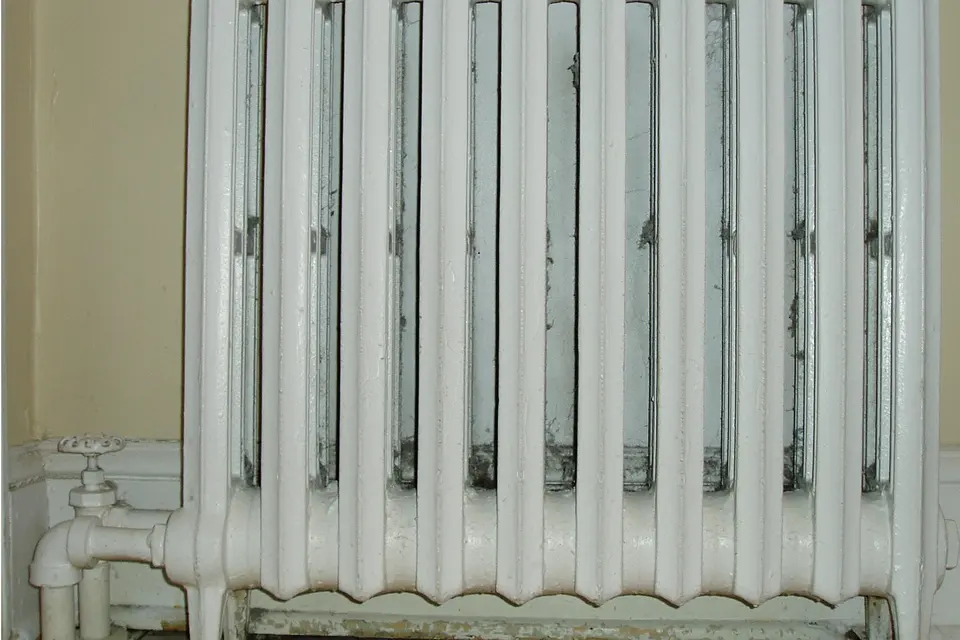
Where do you find radiators in Fort Wayne?
Older neighborhoods are the place to look, though no count turned up. West Central, listed on the National Register as the West End Historic District (NRIS 84000352, 1984), developed as a residential area in the canal era of the 1830s. The Census counts heating fuel, with utility gas in 71.0% of Fort Wayne's occupied homes, and that table doesn't separate boilers from furnaces. If your new boiler would change the outside of a West Central house, ask the association about its 1984 guidelines for exterior changes.
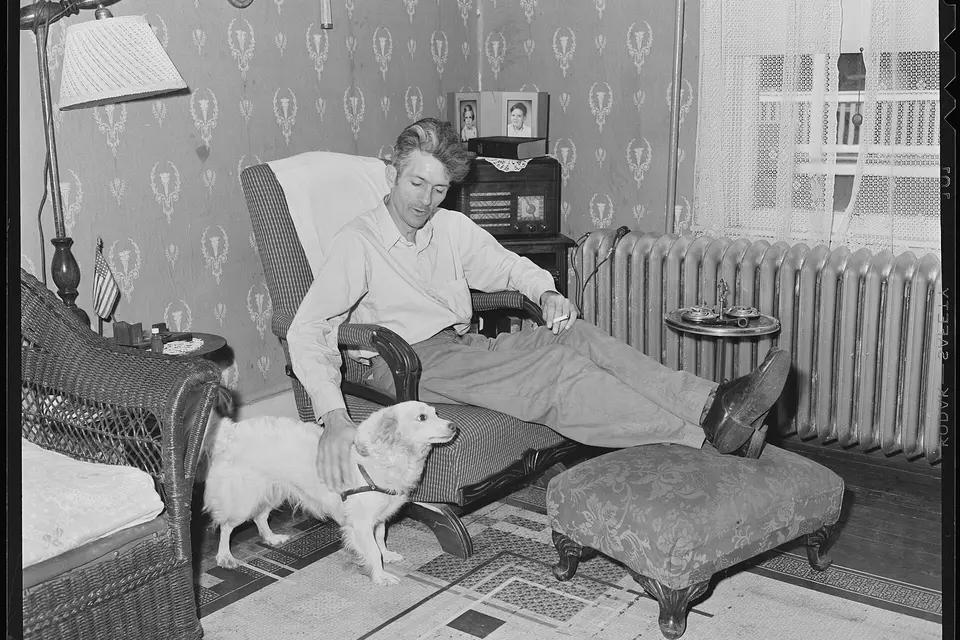
Is yours hot water or steam?
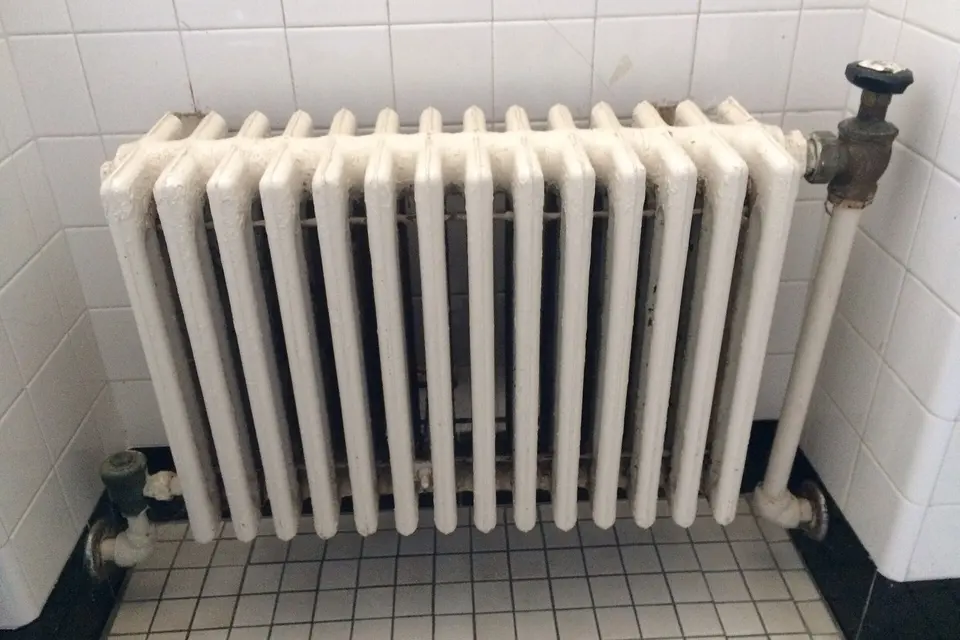
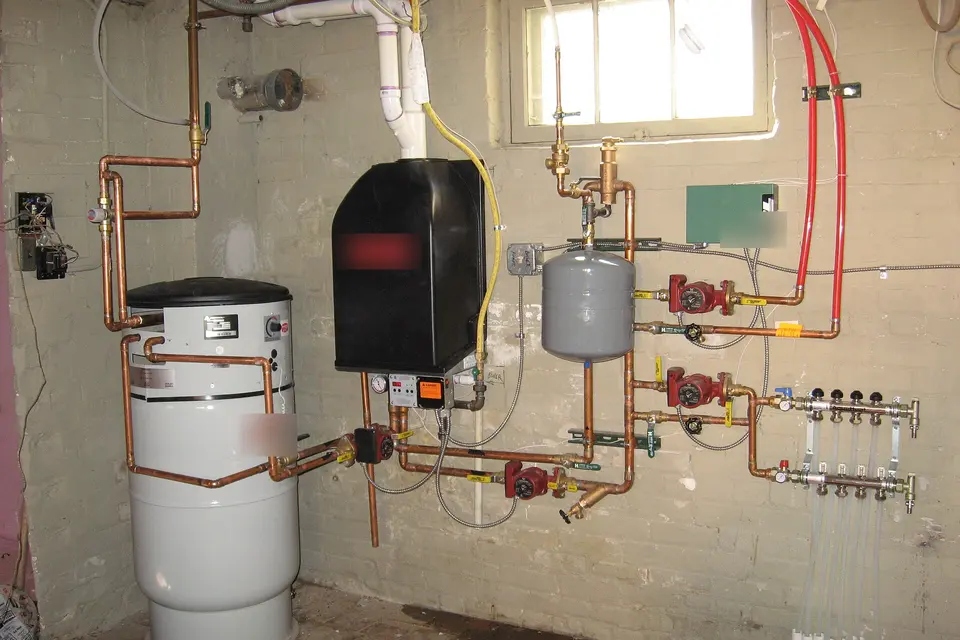
Your boiler's manual or a service tech can tell you, and the answer changes what you may touch. DOE describes boilers as heating water or making steam, then sending it through pipes. The two can look alike in the room. Steam radiators are not bled. Only hot-water systems are, so don't touch a valve or vent until you know which you have. This site isn't offering a test by eye, because the wrong guess means hot water or steam around your hands.
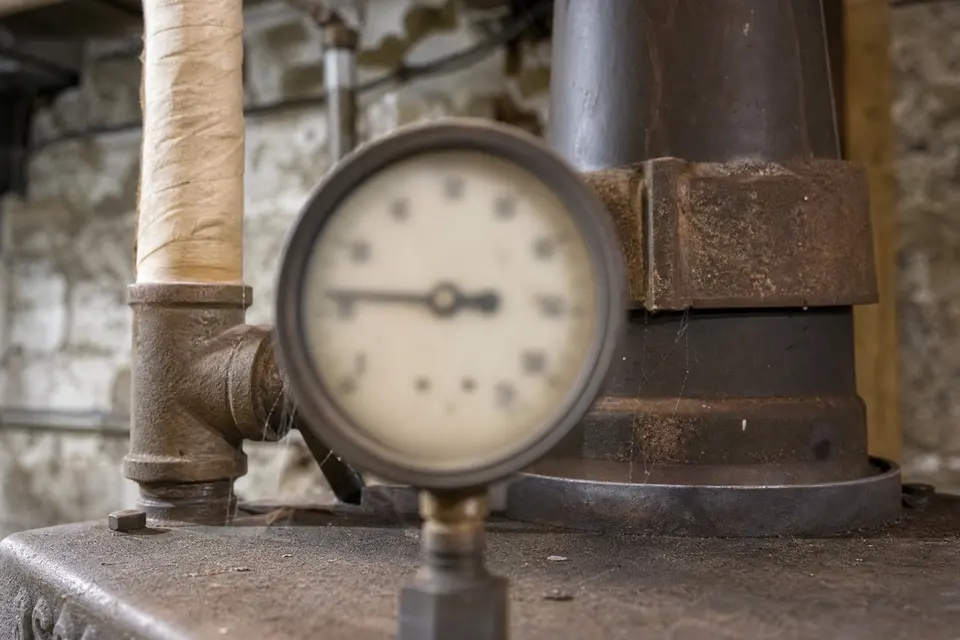
What should the boiler gauge read?
Use your own model's manual, because the numbers are model by model. One maker's hot water boiler manual says "the gauge should read at least 12 psig on most systems" when full and pressurized. Another of its manuals says water boilers must not exceed 24 psig, and steam boilers must not exceed 15 psig. That steam figure is a ceiling and isn't a target. The same manual says "Higher pressure may indicate a problem with the expansion tank or gauge." A reading outside your manual's figures is a reason to call a pro.
| What | The figure | Where it comes from |
|---|---|---|
| Hot water boiler gauge, most systems | at least 12 psig | Weil-McLain GV90+ manual |
| Hot water boiler, upper limit | 24 psig | Weil-McLain user manual |
| Steam boiler, upper limit | 15 psig | Weil-McLain user manual |
| Federal minimum, gas hot water boiler | 84% AFUE | 10 CFR 430.32, Cornell LII copy |
| West End Historic District listed | 1984 (NRIS 84000352) | National Park Service |
How do you bleed a hot-water radiator?
Do it only with the boiler off and cool, and only on a hot-water system. The maker's troubleshooting list says radiators that don't heat or are noisy may have air in the system, and to "Bleed air from system through air vents in radiators or baseboard units." Follow your own boiler manual's bleed steps first. The video below shows the idea on a UK panel radiator, which looks different from old cast iron: the engineer opens the bleed point a little until the air stops, then closes it. Then read the gauge. If it reads low, leave the refilling to a pro.
What about the wrap on old pipes?
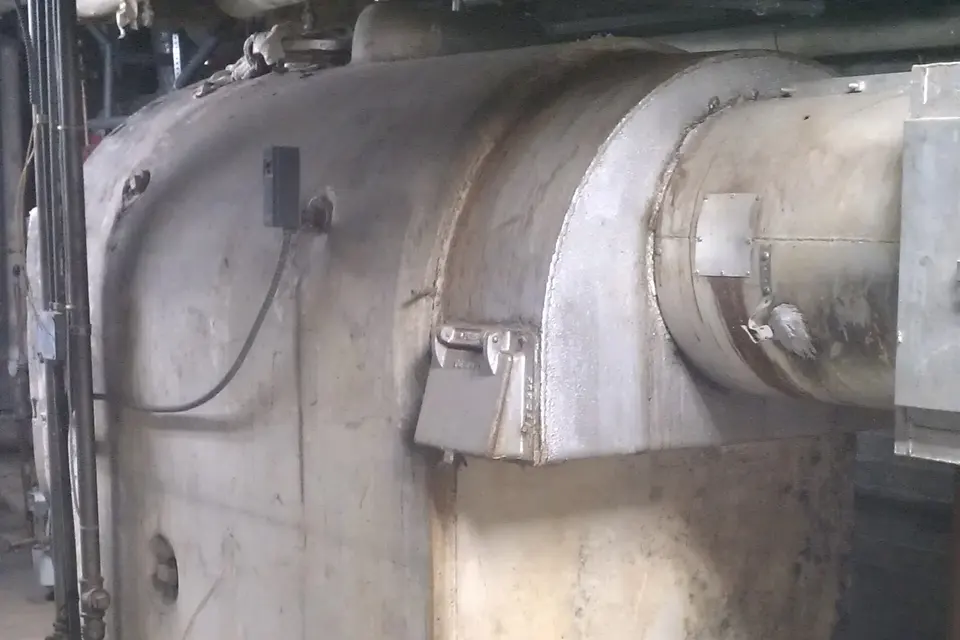
Leave it alone. The EPA says hot water and steam pipes may be coated with asbestos or wrapped in an asbestos blanket or tape. Its advice is plain: "If in doubt, treat the material as if it contains asbestos and leave it alone." It also says, "If you suspect material contains asbestos, don't touch it." Repair or removal belongs to trained and accredited professionals. Tell any boiler contractor about old wrap before work begins.
What about replacing an old boiler?
A replacement is a licensed job with a few numbers attached. The federal minimum for gas hot water boilers is 84% AFUE. A distributor's copy of a January 2026 flyer lists a $250 NIPSCO rebate at 95% AFUE or higher, ending December 31, 2026. Confirm that on NIPSCO's site. Keep a working CO alarm either way. If one sounds, everyone gets out first, then call 911 from outside. Don't look for the source, and don't go back until responders say so.
What to do
Right now
- Find your boiler's model and manual, and read the gauge against it.
- Find out whether your system is hot water or steam.
- Move furniture and drapes away from radiators.
Before next winter
- Bleed hot-water radiators that stay cold at the top, with the boiler off and cool.
- Test your CO alarms.
- Have the boiler inspected and serviced, as CPSC advises each year.
Call a pro when
- The gauge is above your manual's limit, or low after bleeding.
- You see old pipe wrap that is damaged, or work will disturb it.
- A steam radiator isn't heating. Steam radiators are not bled.
What neighbors ask
Can I bleed a steam radiator in my West Central house?
No. Steam radiators are not bled. Have a pro look at a steam radiator that isn't heating.
What does a pressure reading over 24 psig mean on a hot water boiler?
One maker's manual says water boilers must not exceed 24 psig, and that higher pressure may indicate a problem with the expansion tank or gauge. Call a pro.
Is 12 psig right for a steam boiler?
That figure comes from a hot water boiler's manual, so don't apply it to steam. One maker's steam ceiling is 15 psig, and your own manual has your figure.
How can I tell if the wrap on my pipes is asbestos?
You can't tell by looking, so EPA says to treat doubtful material as if it contains asbestos and leave it alone. Repair or removal is for trained and accredited professionals.
Does the British Gas video apply to old cast iron?
The idea is the same for hot water systems, but it shows a UK panel radiator. Your vent may look different, and the water can be hot, so wait until the boiler is off and cool.
Where this came from
This essay rests on boiler manuals, the EPA, DOE, the National Park Service, the West Central Neighborhood Association and a Cornell copy of 10 CFR 430.32, checked November 3, 2026. No local count of boilers or radiators was found. NIPSCO's rebate figure comes only from a distributor's copy of its flyer, so confirm it on NIPSCO's site. Your own boiler's manual outranks every number here.